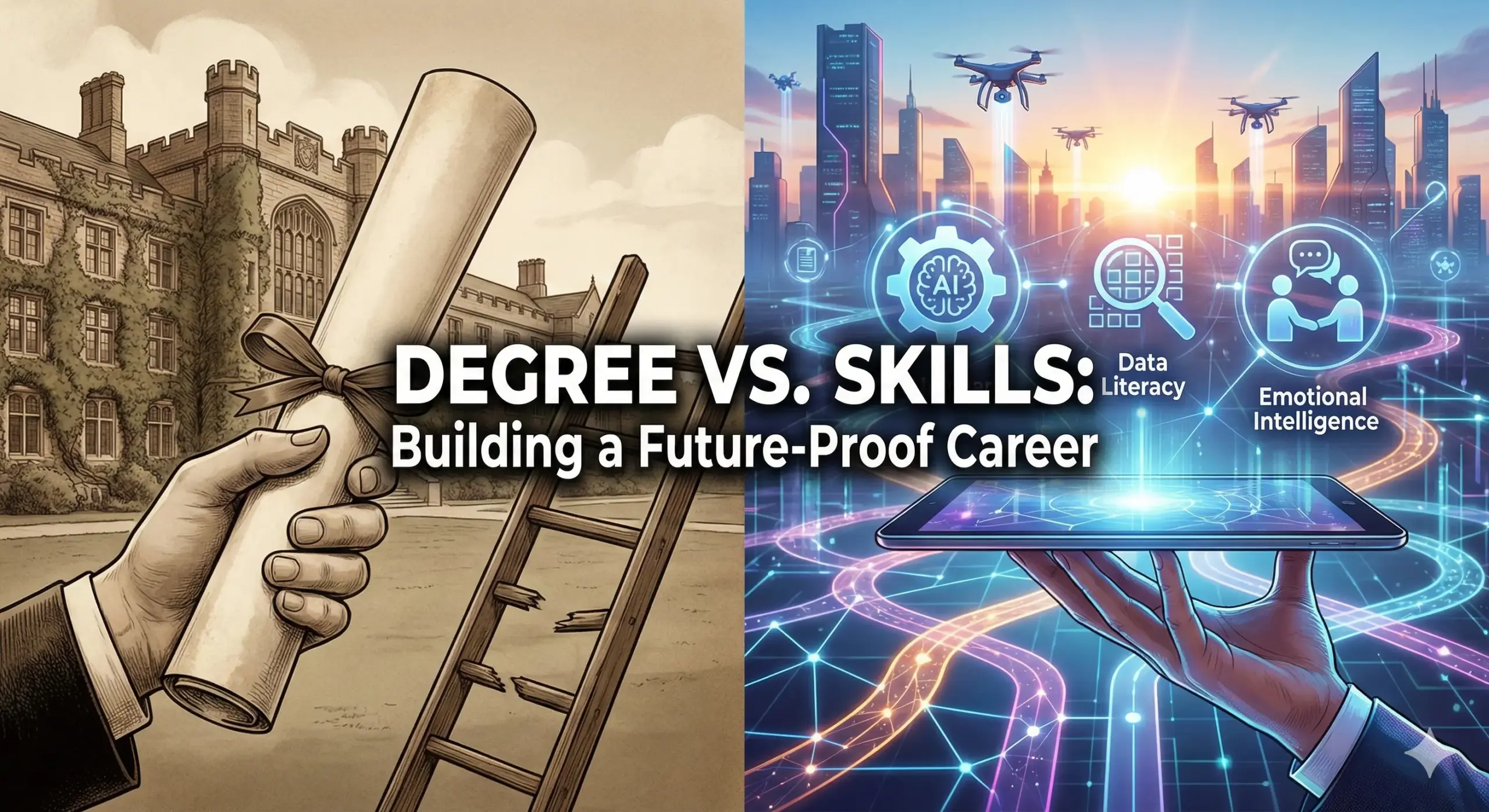

The old formula for success was simple: Go to college + Get a degree = Get a safe job for 30 years.
But if you look around today, that formula is broken. With the rise of AI, remote work, and the gig economy, the rules of the career game have changed. In 2026, employers are asking less about “Where did you go to college?” and more about “What can you actually build/do?”
So, how do you navigate this new landscape? Here is your guide to building a career that survives and thrives in the modern world.
1. The “Skill-First” Mindset
While a university degree shows you have discipline and foundational knowledge, it is no longer the golden ticket. Companies like Google, Tesla, and top startups are increasingly hiring based on skills.
The market is shifting towards a “Show, Don’t Just Tell” model.
-
Don’t just say you know marketing; show your portfolio.
-
Don’t just say you can code; show your GitHub repository.
2. The “Hybrid” Professional
The most successful employees today are “T-Shaped.”
-
The Vertical Bar: Deep expertise in one specific area (e.g., Data Analysis).
-
The Horizontal Bar: Broad knowledge of other areas (e.g., Communication, Basic Design, Psychology).
Being good at just one thing is risky. Being an expert in one thing and understanding how business works makes you irreplaceable.
3. Top Skills to Master in 2026
Regardless of your industry, these three skills are currently in highest demand:
-
Data Literacy: You don’t need to be a data scientist, but you must understand how to read data to make decisions.
-
AI Collaboration: AI won’t replace you, but a person using AI will. Learn how to use tools like ChatGPT, Claude, or Midjourney to speed up your work.
-
Emotional Intelligence (EQ): Machines are great at logic, but terrible at empathy. Sales, leadership, and team management require human connection.
4. Practical Steps to Take Today
If you feel stuck or unsure about your path, follow this 4-step framework:
-
The “Ikigai” Check: Find the intersection of What you love, What you are good at, and What the market pays for.
-
Micro-Internships: Don’t wait for a 6-month internship. Do small freelance projects to test different industries.
-
Network aggressively: Your “net worth” really is your “network.” Optimize your LinkedIn profile and connect with 5 new people in your industry every week.
-
Upskill Monthly: The technology you learned in year 1 of college might be obsolete by year 4. Take short certifications to stay updated.
Conclusion
Your career is not a ladder; it’s a jungle gym. You might move sideways, down, or diagonally before you move up. And that is okay.
Focus on building a portfolio of skills, stay curious, and remember: The best time to start learning a new skill was yesterday. The second best time is today.